Showing posts with label GENERAL. Show all posts

Bhima's son like Gadotkach-like skeleton found. The discovery was made by National Geographic Team

Bhima's son like Gadotkach-like skeleton found. The discovery was made by National Geographic Team


source Incredible pics

Shakespeare Love Quotes - 10


 Shakespeare Love Quotes,Shakespeare Love Quotes,Shakespeare Love Quotes

1,Now join your hands, and with your hands your hearts.

2,They do not love that do not show their love.
The course of true love never did run smooth.
Love is a familiar. Love is a devil. There is no evil angel but Love.

3,For thy sweet love remember'd such wealth brings,
That then I scorn to change my state with kings.

4,I'll follow you and make a heaven out of hell, and I'll die by your hand which I love so well.

5,In thy face I see honor, truth and loyalty.

6,Now join your hands, and with your hands your hearts.

7,Love goes toward love.

8,Love is not love
Which alters when it alteration finds,
Or Bends with the remover to remove.
O, no! It is an ever-fixed mark,
That looks on tempests and is never shaken.
It is the star to every wandering bark,
whose worth's unknown, although his height be taken.

9,Love sought is good, but given unsought, is better.

10,Love is a smoke raised with the fume of sighs,
Being purged, a fire sparkling in lovers' eyes,
Being vexed, a sea nourished with lovers' tears.
What is it else? A madness most discreet,
A choking gall and a preserving sweet.

Alam ara(first sound movie in india)


March 14, 1931 was a historic day for Indian cinema. Ardeshir Irani of Imperial Movietone released Alam Ara, the first full-length Indian talkie film at the Majestic cinema in Bombay. This film very effectively broke the golden silent era and laid a milestone that marked the steeping into the new talkie era as well as rang the death knell to silent films.
However, it was the Warner Bros who had only a few years earlier launched the sound era with Don Juan (1926) starring Mary Astor with synchronised  musical score and sound effects and followed by Jazz Singer. But it was Lights of New York (1928) that was the first talkies film followed closely by Hitchcock’s Blackmail (Britain) and Rene Clair’s Sous Les Toits Paris (France). Meanwhile, India’s first synchronised film Melody of Love was by Madan Theatres in 1929.
Alam Ara: 124 minutes; black & white; Hindi-Urdu
Director:   Ardeshir Irani
Production company: Imperial Movietone
Scriptwriter: Joseph David
Cinematography: Adi M. Irani, Wilford Deming
Music:  Ferozshah M. Mistri, B. Irani
Lead players: Master Vithal, Miss Zubeida, Jilloo, Sushila, Prithviraj Kapoor, Elizer,   Wazir Mohammad Khan, Jagdish Sethi,  LV Prasad


Earthquake hits Japan:::::triggers Tsunami


Japan was hit by a massive earthquake the measured 8.9 on the Richter scale, on March 11. This was followed by a 10 meters high Tsunami wave that washed away Northern Japan. The nearest city to the epicenter is the coastal city of Honshu, 130 km (80 miles) from the quake center. Japan's capital city Tokyo is situated 373 km (231 miles) away. Take a look at some photos.


·         The resulting tsunami, with waves in excess of 10 meters in height, struck the port of Sendai and devastated a large part of North East Japan
·         This is reported to be the worst earthquake in 140 years
·         All public transport, rail, air, port and mobile services were shut down. Schools are providing shelter to stranded commuters
·         Nuclear power emergency declared. Five plants shut down. A fire broke out at Oganawa nuclear plant in NE Japan and has since been extinguished
·         The Yen dropped, Nikkei closed at a five-week low and all other world markets are trading lower than usual.
·         Honda has suspended operations at its assembly plant in Saitama, near Tokyo


·         As many as 80 buildings, many of them in Tokyo, burst into flames as a result of the quake
·         4 million households have been deprived of electricity
·         Tsunami alert along the Pacific Coast; Hawaii experiences a 4.9 magnitude quake; Taiwan, Russia, Chile still on high alert
·         Hawaii, Russia and Taiwan have evacuated people from the danger areas
·         US, Britain and India have offered to help the Japanese government. The Indian embassy has also assured that 25,000 Indians in Japan are safe
·        The official toll stands at 59; true figures are expected only once communications are restored


Harley-Davidson Bikes(small introduction)


Harley-Davidson often abbreviated H-D or Harley, is an American motorcycle manufacturer. Founded in Milwaukee, Wisconsin, during the first decade of the 20th century, it was one of two major American motorcycle manufacturers to survive the Great Depression. Harley-Davidson also survived a period of poor quality control and competition from Japanese manufacturers.
The company sells heavyweight (over 750 cc) motorcycles designed for cruising on the highway. Harley-Davidson motorcycles (popularly known as "Harleys") have a distinctive design and exhaust note. They are especially noted for the tradition of heavy customization that gave rise to the chopper style of motorcycle. Except for the modern VRSC model family, current Harley-Davidson motorcycles reflect the styles of classic Harley designs. Harley-Davidson's attempts to establish itself in the light motorcycle market have met with limited success and have largely been abandoned since the 1978 sale of its Italian Aermacchi subsidiary.
Harley-Davidson sustains a loyal brand community which keeps active through clubs, events, and a museum. Licensing of the Harley-Davidson logo accounts for almost 5% of the company's net revenue.


Airbus A380


Airbus’ 21st Century flagship A380 has been revolutionising air transport since its service introduction in 2007, bringing unmatched performance and economic efficiency to airline customers worldwide.

The double-deck A380 is the world’s largest commercial aircraft flying today, with capacity to carry 525 passengers in a comfortable three-class configuration, and up to  853 in a single-class configuration that provides wider seats than its competitor. Overall, the A380’s two decks offer 50 per cent more floor surface than any other high-capacity aircraft.

With its range of 8,300 nautical miles, the A380 is the ideal solution to alleviate traffic congestion at busy airports, while coping with market growth.  It has two full-length passenger levels with true widebody dimensions: a main deck and an upper deck, which are linked by fixed stairs forward and aft.


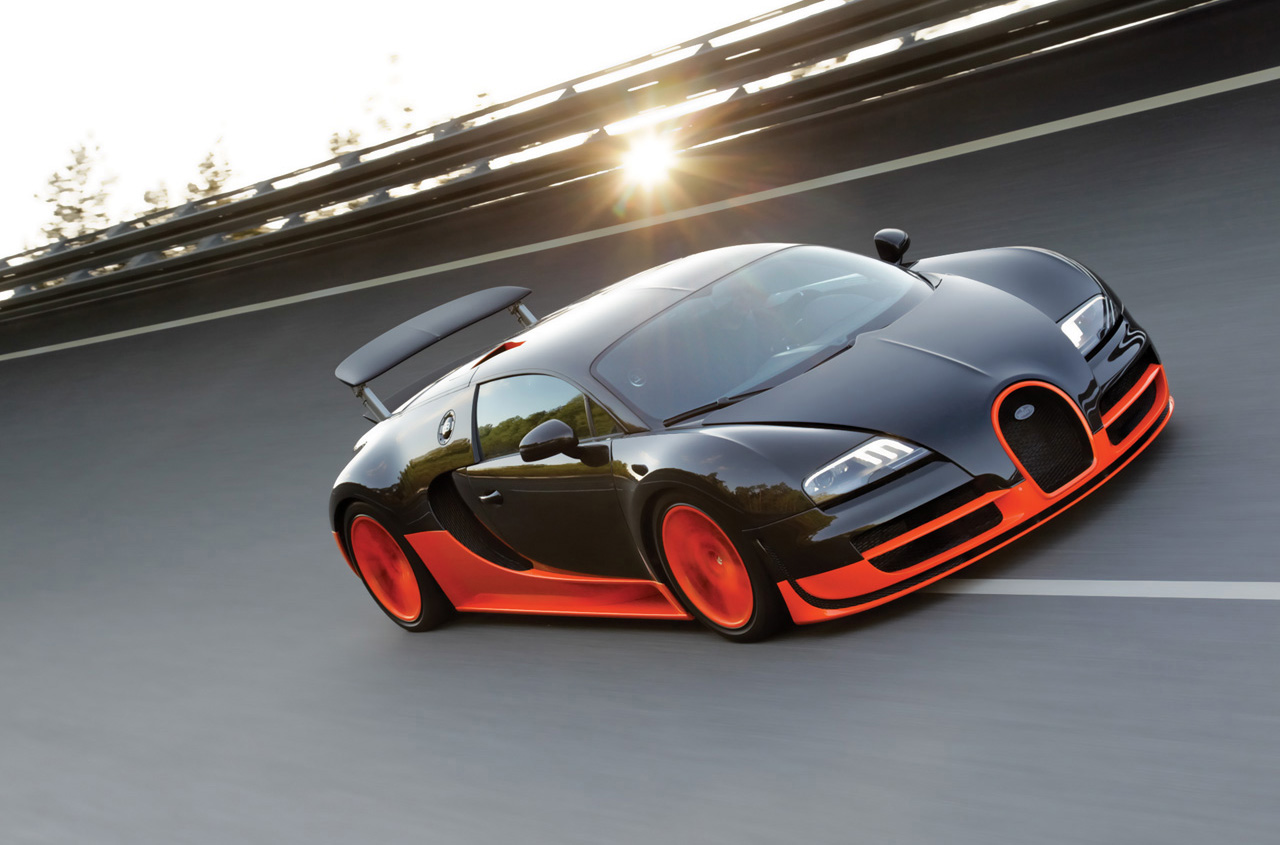
BUGATTI VEYRON


Not just a super car that carries on the name of racing driver Pierre Veyron, who, while racing for the original Bugatti car manufacturer, won the 24 hours of Le Mans in 1939, Bugatti Veyron 16.4 is the second fastest car in the world and the most powerful, it can easily pass as a super hero`s car like Batman. It has the fastest acceleration speed, reaching 60 mph in 2.6 seconds.


Endowed with W16 engine-16 cylinders in 4 banks of 4 cylinders fed by four turbochargers, a dual-clutch DSG computer-controlled manual transmission, the Veyron has a length is 4462 mm (175.8 in) a wide of 1998 mm (78.7 in) and hight of 1206 mm (47.5 in). Counting a sum of 10 radiators, for the engine cooling system, for transmission oil, a heat exchanger for the air to liquid intercoolers, for engine oil etc., the car has a power to weight ratio of 529 bhp/tonne.


If we talk about performance we are dazzled by this supercars power to reach 200 and 300 km/h (124 and 186 mph) in 7.3 and respectively 16.7 seconds, wining for herself the name of the quickest-accelerating production car in history. If we count the fact that the top speed of Bugatti Veyron is 253.2 miles per hour (407.5 km/h), a speed limited electronically to prevent tire damage (it can run even faster) we can understand why this spectacular car must consume 40.4 L/100 km (4.82 mpg) when it`s running at top speed and in city driving 24.1 L/100 km.
A model drove by superstars like Tom Cruise, couldn`t name itself cheap, rising the Bugatti Veyron at least of $1,700,000, a price that measures it`s quality. Many new designs has been released since 2006, the color might have changed, but the speed and power remain the same.


Cheapest Car Tracking System


The project includes the development of the software and hardware for a Micro controller based tracking system based on the technique “Dromography”. Here ‘dromos' means [way, street, route, corridor] + 'graphos' [to write], so Dromography is the study of geography and logistics of transportation, movement and communication routes. The digital dashboard will display the speed, distance traveled, engine temperature, mileage and fuel level of the vehicle. All the parameters are displayed in 16x1 LCD
Here the project comes under the embedded systems, which is the combination of software and hardware and perhaps some sensors, which are used to perform a specific tracing function. The project is done using Microchip’s Microcontroller PIC16F877. Micro controller programming is done using assembly language in Microchip’s integrated development environment MPLAB version 5.60
 The hardware part keeps monitoring the speed and the direction of the vehicle. The hardware sends the data to computer via serial port and track is plotted with the help of interface software. Again the hardware section can be divided in to microcontroller, input unit, output unit, and the display unit .The software section have the microcontroller coding and the user interface window programming. Using Visual Basic language the window is developed. The route is traced on this window. Some additional push buttons such as SAVE, LOAD and CLEAR are also provided to perform some useful tasks.
This project is very helpful to make a map to plot and retrace the route of a vehicle. And it also take care of displaying speed, distance, engine temperature and mileage. This is very useful method for town planning and road survey .Again these maps are also used to trace our position in the map. Being an independent gadget it works accurately with a high precision.
In this technological era many advanced tracking systems are available in market .Which are mostly based on Global Positioning System. But if anyone wants to enjoy these facilities, they have to pay a lot for the receiver and other service charges. Also there are many other limitations like geographical position of the place, satellite coverage etc, which affects the service.
Here the necessity comes to develop an efficient tracking system, with a least cost. The system should work effectively any ware, having user friendly interaction with the facility to store and load the data which are collected previously.

Biometric Fingerprint Identification


Positive identification of individuals is a very basic societal requirement. Reliable user authentication is becoming an increasingly important task in the web –enabled  world. The  consequences  of  an  insecure  authentication  system  in  a corporate or enterprise environment can be catastrophic, and may include loss of confidential information, denial of service, and compromised  data integrity. The value of  reliable user  authentication is  not limited to  just computer  or  network access. Many other applications in every day life also require user authentication, such as banking, e-commerce, and could benefit from enhanced security.
In fact, as more interactions take electronically, it becomes even more important to have an electronic verification of a person’s identity. Until recently, electronic verification took one of two forms. It was based on something the person had in their possession, like a magnetic swipe card, or something they knew, like a password. The problem is, these forms of electronic identification are not very secure, because they can be given away, taken away, or lost and motivated people have found ways to forge or circumvent these credentials.
The ultimate form of electronic verification of a person’s is biometrics. Biometrics refers to the automatic identification of a person based on his/her physiological or behavioral characteristics such as finger scan, retina, iris, voice scan, signature scan etc. By using this technique physiological characteristics of a person can be changed into electronic processes that are inexpensive and easy to use. People have always used the brain’s innate ability to recognize a familiar face and it has long been known that a person’s fingerprints can be used for identification.
IDENTIFICATION AND VERIFICATION SYSTEMS
A person’s identity can be resolved in two ways: identification and verification. The former involves identifying a person from all biometric measurements collected in a database and this involves a one-to-many match also referred to as ‘cold search’. “Do I know who you are”? is the inherent question this process seeks to answer. Verification involves authenticating a person’s claimed identity from his or her previously enrolled pattern and this involves a one to one match. The question it seeks to answer is, “Are you claim to be?”
VERIFICATION
Verification involves comparing a person’s fingerprint to one that pass previously recorded in the system database. The person claiming an identity provided a fingerprint, typically by placing on a capacitance scanner or an optical scanner. The computer locates the previous fingerprint by looking at the person’s identity. This process is relatively easy because the computer needs to compare two fingerprint records. The verification process is referred as a ‘closed search’ because the search field is limited. The second question is “who is this person?” This is the identification function, which is used to prevent duplicate application or enrollment. In this case a newly supplied fingerprint is supplied to all others in the database.  A match indicates that the person has already enrolled/applied.
IDENTIFICATION
The identification process, also known as an ‘open search’, is much more technically demanding. It involves many more comparisons and may require differentiating among several database fingerprints that are similar to the objects.

Virtual keyboard


At their most basic, all keyboards, whether they're physical or virtual, are input devices -- once you type in a certain series of keystrokes, you're telling the keyboard to deliver a command to your computer. This allows you to write in a word-processing document, close out a program or write out a Web site's URL in a browser. But apart from the science-fiction element, what sets a virtual laser keyboard apart from a regular keyboard?

A traditional keyboard, one that hooks up to a desktop computer or is part of a laptop, is very much like another smaller computer. If you take it apart, it has a processor and circuitry similar to the insides of your computer. Underneath each key is a grid of circuits, and once you press a key, the switch closes. This sends a small electrical current through the grid, which the processor recognizes and analyzes. The processor, in turn, sends the information regarding your keystrokes to your computer, and it can do this several ways. Most desktop users connect their keyboard using cables, although common wireless technologies like Bluetooth let you type from a distance, as long as the computer has the necessary receiver. Laptop keyboards, on the other hand, connect directly to the computer's hardware.

When you type on a virtual laser keyboard, there aren't any switches involved. In fact, there aren't any mechanical moving parts at all. The device projects the image of a QWERTY keyboard onto a flat, non-reflective surface using a red diode laser. The laser, similar to the kind you see on those cheap laser pointers people wave at rock concerts, shines through a Diffractive Optical Element (DOE), which is simply a tiny image of the keyboard. The DOE, along with special optical lenses, expands the image to a usable size and projects it onto a surface.

But a simple image of a keyboard won't get you anywhere -- something needs to analyze the information you type in. Situated near the bottom of the device is an infrared (IR) laser diode, which shoots out a thin plane of infrared light. The plane, which is invisible and runs parallel to the surface, rests only millimeters above the image of the keyboard. When you start typing, you pass your fingers through certain areas of the infrared light. A CMOS (complimentary metal-oxide semiconductor) images your finger's position within the area of the keyboard, and a special sensor chip called a Virtual Interface Processing Core analyzes the location of the intended keystroke. The device then sends this information to the computer receiving the commands.

VIRUS


Do viruses and all the other nasties in cyberspace matter? Do they really do much harm? Imagine that no one has updated your anti-virus software for a few months. When they do, you find that your accounts spreadsheets are infected with a new virus that changes figures at random. Naturally you keep backups. But you might have been backing up infected files for months. How do you know which figures to trust? Now imagine that a new email virus has been released. Your company is receiving so many emails that you decide to shut down your email gateway altogether and miss an urgent order from a big customer.

Imagine that a friend emails you some files he found on the Internet. You open them and trigger a virus that mails confidential documents to everyone in your address book including your competitors. Finally, imagine that you accidentally send another company, a report that carries a virus. Will they feel safe to do business with you again? Today new viruses sweep the planet in hours and virus scares are major news. A computer virus is a computer program that can spread across computers and networks by making copies of itself, usually without the user’s knowledge. Viruses can have harmful side effects. These can range from displaying irritating messages to deleting all the files on your computer.

A virus program has to be run before it can infect your computer. Viruses have ways of making sure that this happens. They can attach themselves to other programs or hide in code that is run automatically when you open certain types of files. The virus can copy itself to other files or disks and make changes on your computer. Virus side effects, often called the payload, are the aspect of mostinterest to users. Password-protecting the documents on a particular day, mailing information about the user and machine to an address somewhere are some of the harmful side effects of viruses. Various kinds of viruses include macro virus, parasitic or file virus, Boot virus, E-mails are the biggest source of viruses. Usually they come as attachments with emails.

The Internet caused the spreading of viruses around the globe. The threat level depends on the particular code used in the WebPages and the security measures taken by service providers and by you. One solution to prevent the viruses is anti-virus softwares. Anti-virus software can detect viruses, prevent access to infected files and often eliminate the infection.

Computer viruses are starting to affect mobile phones too. The virus is rare and is unlikely to cause much damage. Anti-virus experts expect that as mobile phones become more sophisticated they will be targeted by virus writers. Some firms are already working on anti-virus software for mobile phones. VBS/Timo-A, Love Bug,Timofonica,CABIR,aka ACE-? and UNAVAILABLE are some of the viruses that affect the mobile phones


BASIC CONCEPTS
What is a virus?
A computer virus is a computer program that can spread across computers and networks by making copies of itself, usually without the user’s knowledge. Viruses can have harmful side-effects. These can range from displaying irritating messages to deleting all the files on your computer.
Evolution of virus
In the mid-1980s Basit and Amjad Alvi of Lahore, Pakistan discovered that people were pirating their software. They responded by writing the first computer virus, a program that would put a copy of itself and a copyright message on any floppy disk copies their customers made. From these simple beginnings, an entire virus counter-culture has emerged. Today new viruses sweep the planet in hours and virus scares are major news
How does a virus infect computers?

A virus program has to be run before it can infect your computer. Viruses have ways of making sure that this happens. They can attach themselves to other programs or hide in code that is run automatically when you open certain types of files. You might receive an infected file on a disk, in an email attachment, or in a download from the internet. As soon as you launch the file, the virus code runs. Then the virus can copy itself to other files or disks and make changes on your computer.
Who writes viruses?
Virus writers don’t gain in financial or career terms; they rarely achieve real fame; and, unlike hackers, they don’t usually target particular victims, since viruses spread too indiscriminately. Virus writers tend to be male, under 25 and single. Viruses also give their writers powers in cyberspace that they could never hope to have in the real world.
Virus side effects(Payload)
Virus side-effects are often called the payload. Viruses can disable our computer hardware, Can change the figures of an accounts spreadsheets at random, Adversely affects our email contacts and business domain, Can attack on web servers…
 Messages -WM97/Jerk displays the message ‘I think (user’s name) is a big stupid jerk!’  Denying access -WM97/NightShade password-protects the current document on Friday 13th. Data theft- Troj/LoveLet-A emails information about the user and machine to an address in the Philippines
. Corrupting data -XM/Compatable makes changes to the data in Excel spreadsheets. Deleting data -Michelangelo overwrites parts of the hard disk on March 6th.
 Disabling Hardware -CIH or Chernobyl (W95/CIH-10xx)
 attempts to overwrite the BIOS on April 26th, making the machine unusable.
 Crashing servers-Melissa or Explore Zip, which spread via email, can generate so much mail that servers crash.
There is a threat to confidentiality too. Melissa can forward documents, which may contain sensitive information, to anyone in your address book. Viruses can seriously damage your credibility. If you send infected documents to customers, they may refuse to do business with you or demand compensation. Sometimes you risk embarrassment as well as a damaged business reputation. WM/Polypost, for example, places copies of your documents in your name on alt.sex usenet newsgroups.
VIRUSES AND VIRUS LIKE PROGRAMMES
Trojan horses
Trojan horses are programs that do things that are not described in their specifications The user runs what they think is a legitimate program, allowing it to carry out hidden, often harmful, functions. For example, Troj/Zulu claims to be a program for fixing the ‘millennium bug’ but actually overwrites the hard disk. Trojan horses are sometimes used as a means of infecting a user with a computer virus.
Backdoor Trojans
A backdoor Trojan is a program that allows someone to take control of another user’s PC via the internet. Like other Trojans, a backdoor Trojan poses as legitimate or desirable software. When it is run (usually on a Windows 95/98 PC), it adds itself to the PC’s startup routine. The Trojan can then monitor the PC until it makes a connection to the internet. Once the PC is on-line, the person who sent the Trojan can use software on their computer to open and close programs on the infected computer, modify files and even send items to the printer. Subseven and Back Orifice are among the best known backdoor Trojans.
Worms
Worms are similar to viruses but do not need a carrier (like a macro or a boot sector).They are subtype of viruses. Worms simply create exact copies of themselves and use communications between computers to spread. Many viruses, such as Kakworm (VBS/Kakworm) or Love Bug (VBS/LoveLet-A), behave like worms and use email to forward themselves to other users.
Boot sector viruses
Boot sector viruses were the first type of virus to appear. They spread by modifying the boot sector, which contains the program that enables your computer to start up. When you switch on, the hardware looks for the boot sector program – which is usually on the hard disk, but can be on floppy or CD – and runs it. This program then loads the rest of the operating system into memory. A boot sector virus replaces the original boot sector with its own, modified version (and usually hides the original somewhere else on the hard disk). When you next start up, the infected boot sector is used and the virus becomes active. You can only become infected if you boot up your computer from an infected disk, e.g. a floppy disk that has an infected boot sector. Many boot sector viruses are now quite old.
Those written for DOS machines do not usually spread on Windows 95, 98, Me, NT or 2000 computers, though they can sometimes stop them from starting up properly. Boot viruses infect System Boot Sectors (SBS) and Master Boot Sectors (MBS). The MBS is located on all physical hard drives. It contains, among other data, information about the partition table (information about how a physical disk is divided into logical disks), and a short program that can interpret the partition information to find out where the SBS is located. The MBS is operating system independent. The SBS contains, among other data, a program whose purpose is to find and run an operating system. Because floppy diskettes are exchanged more frequently than program files boot viruses are able to propagate more effectively than file viruses.Form -A virus that is still widespread ten years after it first appeared.
The original version triggers on the 18th of each month and produces a click when keys are pressed on the keyboard. Parity Boot - A virus that may randomly display the message ‘PARITY CHECK’ and freeze the operating system. The message resembles a genuine error message displayed when the computer’s memory is faulty.
Parasitic virus (File virus)
Parasitic viruses, also known as file viruses, attach themselves to programs (or ‘executables’) and Acts as a part of the program .When you start a program infected with a file virus, the virus is launched first. To hide itself, the virus then runs the original program. The operating system on your computer sees the virus as part of the program you were trying to run and gives it the same rights. These rights allow the virus to copy itself, install itself in memory or release its payload. these viruses Infects over networks.
The internet has made it easier than ever to distribute programs, giving these viruses new opportunities to spread.
 Jerusalem- On Friday 13th deletes every program run on the computer.
 CIH (Chernobyl) - On the 26th of certain months, this virus will overwrite part of the BIOS chip, making the computer unusable. The virus also overwrites the hard disk.
 Remote Explorer - WNT/RemExp (Remote Explorer) infects Windows NT executables. It was the first virus that could run as a service, i.e. run on NT systems even when no-one is logged in. Parasitic viruses infects executables by companion, link, overwrite, insert, prep end, append techniques

a) Companion virus
A companion virus does not modify its host directly. Instead it maneuvers the operating system to execute itself instead of the host file. Sometimes this is done by renaming the host file into some other name, and then grant the virus file the name of the original program. Or the virus infects an .EXE file by creating a .COM file with the same name in the same directory. DOS will always execute a .COM file first if only the program name is given, so if you type “EDIT” on a DOS prompt, and there is an EDIT.COM and EDIT.EXE in the same directory, the EDIT.COM is executed.
b) Linking Virus
A link virus makes changes in the low-level workings of the file system, so that program names do no longer point to the original program, but to a copy of the virus. It makes it possible to have only one instance of the virus, which all program names point to.

Artificial neural network


This seminar is about the artificial neural network application in processing industry. An artificial neural network as a computing system is made up of a number of simple and highly interconnected processing elements, which processes information by its dynamic state response to external inputs. In recent times study of ANN models have gained rapid and increasing importance because of their potential to offer solutions to some of the problems in the area of computer science and artificial intelligence. Instead of performing a program of instructions sequentially, neural network models explore many competing hypothesis simultaneously using parallel nets composed of many computational elements. No assumptions will be made because no functional relationship will be established. Computational elements in neural networks are non linear models and also faster. Hence the result comes out through non linearity due to which the result is very accurate than other methods. The details of deferent neural networks and their learning algorithm are presented its clearly illustrator how multi layer neural network identifies the system using forward and inverse modeling approach and generates control signal. The method presented here are directed inverse, direct adaptive, internal model and direct model reference control based ANN techniques. 

VOICE MORPHING


Voice morphing means the transition of one speech signal into another. Like image morphing, speech morphing aims to preserve the shared characteristics of the starting and final signals, while generating a smooth transition between them. Speech morphing is analogous to image morphing. In image morphing the in-between images all show one face smoothly changing its shape and texture until it turns into the target face. It is this feature that a speech morph should possess. One speech signal should smoothly change into another, keeping the shared characteristics of the starting and ending signals but smoothly changing the other properties. The major properties of concern as far as a speech signal is concerned are its pitch and envelope information. These two reside in a convolved form in a speech signal. Hence some efficient method for extracting each of these is necessary. We have adopted an uncomplicated approach namely cepstral analysis to do the same. Pitch and formant information in each signal is extracted using the cepstral approach. Necessary processing to obtain the morphed speech signal include methods like Cross fading of envelope information, Dynamic Time Warping to match the major signal features (pitch) and Signal Re-estimation to convert the morphed speech signal back into the acoustic waveform.
This report has been subdivided into seven chapters. The second chapter gives an idea of the various processes involved in this project in a concise manner. A thorough analysis of the procedure used to accomplish morphing and the necessary theory involved is presented in an uncomplicated manner in the third chapter. Processes like pre processing, cepstral analysis, dynamic time warping and signal re-estimation are vividly described with necessary diagrams. The fourth chapter gives a deep insight into the actual morphing process. The conversion of the morphed signal into an acoustic waveform is dealt in detail in the fifth chapter. Chapter six summarizes the whole morphing process with the help of a block diagram. Chapter seven lists the conclusions that have been drawn from this project. 

Robotics


Robots have always had a fascination in our mind. With their various applications in various fields, they have become a common part in our daily life. They are meant to ease our work and increase our comfort of living.
The term ‘robot’ got prominence way back in the 1950s when Karl Capek in his play Rossum’s Universal Robots denoted the birth of a superior race that had intelligence similar to that of humans.
As Robots come in various forms and have application in various fields defining a Robot becomes that much difficult. There are various definitions for the term Robot. Some of them are:
“Force through intelligence”.
“An automatic device that performs functions normally ascribed to humans or a machine in the form of a human”.
The most accepted definition of a Robot provided by the Robotics Institute of America in 1979 is that:
“A robot is a reprogrammable multifunctional manipulator designed to move material, Parts, tools or specialized devices through variable programmed motions for the Performance of a variety of tasks”.
Robotics is that branch which involves with the study and applications of Robots. The goal of Robotics is to mimic natural world as closely as possible. Robotics is a relatively new field of engineering (about approximately 50 years old) and is finding many applications in different areas.
With growing developments in the field of mechatronics and mathematic modeling, Robotics has come a long way. From an iron piece that could move only a few inches, there are now machines capable of jumping from high rise buildings, detecting landmines, performing complicated operations, and troubleshooting.

A good teacher


In my view a good teacher have the ability to bond with your students, to understand and resonate with their feelings and emotions, communicate on their level and be compassionate with them when they are down and to celebrate with them when they are up. You are able to think more on the positive and a little less on the negative.  Need to keep a smile on your face when things get tough. Need to see the bright side of things. Should be well aware to find the positives in every negative situation. To be philosophy is always be an important fact . You are able to acknowledge that the only real constant in life is change. You know there is a place for tradition but there is also a place for new ways, new ideas, new systems, and new approaches. You don't put obstacles in your way by being blinkered and are always open and willing to listen to others' ideas. You are the window through which many young people will see their future. Be a fine role model.
You are able to motivate your students by using creative and inspirational methods of teaching. You are different in your approach and that makes you stand out from the crowd. You know that a great sense of humour reduces barriers and lightens the atmosphere especially during heavy periods. An ability to make your students laugh will carry you far and gain you more respect. It also increases your popularity. You know that your students are visual, auditory or kinesthetic learners. You are adept at creating presentation styles for all three. Your body language is your main communicator and you keep it positive at all times. Like a great orator you are passionate when you speak. But at the same time you know that discussion and not lecturing stimulates greater feedback. You know that the aggression, negative attitudes and behaviours that you see in some of your students have a root cause. You know that they are really scared young people who have come through some bad experiences in life. This keeps you calm and in control of you, of them and the situation. You are good at helping your student de-stress.
You know that no one is more important in the world than anyone else. You know that everyone has a place in the world. You respect your peers and your students. Having that respect for others gets you the respect back from others. You know that you can change a young person's life by helping them to realize their potential, helping them to grow, helping them to find their talents, skills and abilities. You are passionate about what you do. Teaching young people is your true vocation in life. Your purpose in life is to make a difference. You are willing to learn from other teachers AND your students. Although knowledgeable in your subject you know that you never stop learning.

SMILE


       We are drawn to people who smile. There is an attraction factor. We want to know a smiling person and figure out what is so good. Frowns, scowls and grimaces all push people away -- but a smile draws them in. When someone is smiling they lighten up the room, change the moods of others, and make things happier. A smiling person brings happiness with them. Smile lots and you will draw people to you. Next time you are feeling down, try putting on a smile. There's a good chance you mood will change for the better. Smiling can trick the body into helping you change your mood
      Stress can really show up in our faces. Smiling helps to prevent us from looking tired, worn down, and overwhelmed. When you are stressed, take time to put on a smile. The stress should be reduced and you'll be better able to take action. Smiling helps the immune system to work better. When you smile, immune function improves possibly because you are more relaxed. Prevent the flu and colds by smiling. When you smile, there is a measurable reduction in your blood pressure. Give it a try if you have a blood pressure monitor at home. Sit for a few minutes, take a reading. Then smile for a minute and take another reading while still smiling. Do you notice a difference?
    Studies have shown that smiling releases endorphins, natural pain killers, and serotonin. Together these three make us feel good. Smiling is a natural drug. The muscles we use to smile lift the face, making a person appear younger. Don't go for a face lift, just try smiling your way through the day -- you'll look younger and feel better.
Smiling people appear more confident, are more likely to be promoted, and more likely to be approached. Put on a smile at meetings and appointments and people will react to you differently.
     Try this test: Smile. Now try to think of something negative without losing the smile. It's hard. When we smile our body is sending the rest of us a message that "Life is Good!" Stay away from depression, stress and worry by smiling

Cold war


Meaning of Cold War
             At the end of the Second World War, relations between the USA and the USSR deteriorated, especially at Potsdam (July 1945) and Paris (1946). These two powers were rivals and the tension is called the Cold War. In Europe there was a little bloodshed but outside Europe there was more traditional warfare. (Korea, Cuba, Vietnam)
Origins of the Cold War
1. The Cold War began as a result of suspicious that the democratic west had about the USSR and vice versa.
After 1945 the USSR feared a Western invasion of her new satellites and the west feared the spread of Marxism.
2. Relations between the major powers got worse at the end of the Second World War
This occurred especially at Yalta (February 1945), Potsdam (July 1945) and Paris (1946). At Paris, Molotov refused to accept the west’s ideas about not taking reparations and about wanting free elections in Eastern Europe.
3. Germany was divided into four occupation zones:
  1. Britain got the ruins
  2. France got the wine
  3. USA got scenery (Bavaria)
  4. USSR gained the lion’s share and surrounded Berlin
Austria was also divided.
4. In 1946, Churchill at Foulton, Missouri said:
‘An iron curtain is descending on Europe extending from Stettin in the north to Trieste in the south.’
He nearly got it right. The metaphorical line that separates the communist east from the democratic west should not end at Trieste because although Yugoslavia was communist it was independent of the USSR (under Tito). The satellites = Bulgaria, Hungary, Rumania, Poland, Albania, Czechoslovakia and Eastern Germany.
5. Economic Origins
  1. Official America anti-Soviet policy began with the Truman Doctrine (March 1947) where American aid was offered to European countries which bordered onto Communist countries. This was extended by the Marshall Plan (June 1947) which offered aid outside Europe. This was designed to stop the spread of Communism – called CONTAINMENT.
  2. The USSR set up Comminform (Cominform) in September 1947, which Stalin said was a news agency, but really it was a means of Russifying the economic policies of the eastern blob countries.
  3. In June 1948, the three western powers united their zones with a new deutschmark. This financial union was the forerunner of a political union (3 zones = West Germany).
6. The Arms Race
The USSR was annoyed not to know about America’s atom bomb (1945). The USSR gained the atom bomb in 1949 and both sides began to stockpile arms.